I Forgot to Record Transactions for Three Months: How to Fix This

Three months of unrecorded transactions is the most common bookkeeping gap we encounter. It usually starts with one busy week that turns into a busy month, and then suddenly an entire quarter has passed without a single transaction entered. The solution is not a panicked all night session. A structured, month by month recovery plan restores accuracy in days, not weeks.
Many business owners discover the gap when they open their accounting software to prepare for a quarterly estimated tax payment. The bank feed shows hundreds of uncategorized transactions. The balances do not match the actual bank account. The immediate reaction is to close the laptop and deal with it later.
Avoidance makes the problem worse. Every additional day adds more transactions to the pile and pushes the memory of what each purchase was for further out of reach. Fiscal integrity demands that you confront the gap immediately with a proven recovery framework. This guide walks through the exact process we use to rebuild three months of neglected books from scratch.
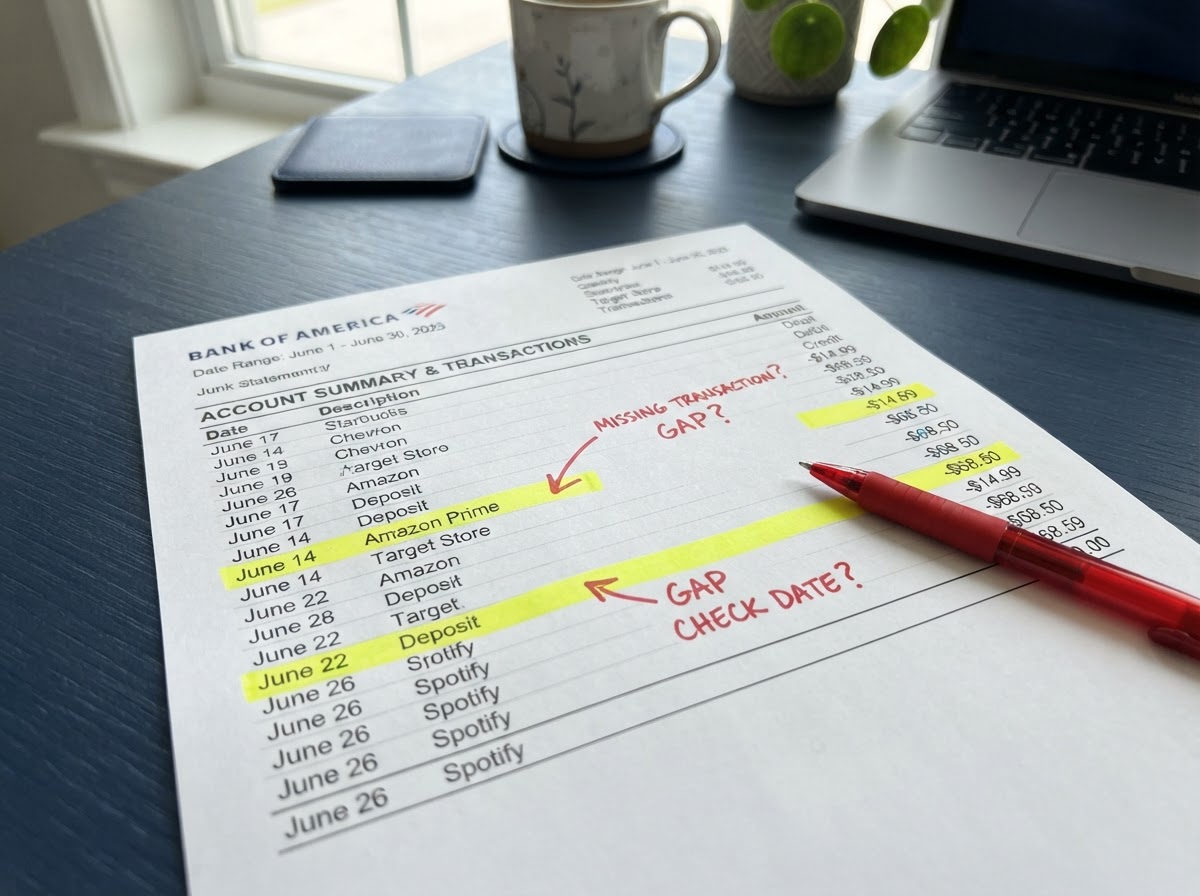
Why Three Months Is the Danger Zone
A one month gap is annoying but manageable. Most business owners can recall what they spent money on thirty days ago. A six month gap feels overwhelming, which paradoxically motivates people to seek professional help. Three months sits in a dangerous middle ground.
It feels small enough to handle alone, so you keep postponing it. But ninety days is long enough that you have forgotten the purpose of specific purchases. You can no longer remember whether that charge to a hardware store was for a client project or a personal home repair.
Three months is also exactly one fiscal quarter. If you miss a quarterly estimated tax payment because your books are incomplete, the IRS assesses underpayment penalties. The gap transforms from an administrative annoyance into a direct financial penalty.
The True Cost of a Quarter Long Gap
Every week your books sit untouched, you lose financial visibility. After thirteen weeks, you are operating on guesswork. You cannot confirm whether your pricing covers your true costs. You cannot identify which clients drain your margins. You cannot prove your profitability to a bank, an investor, or the IRS.
Three months of unrecorded expenses means three months of potentially missed deductions. The IRS does not reward disorganization. If you cannot substantiate a business expense with a receipt or a bank record, you forfeit the deduction. A neglected ledger quietly inflates your taxable income and hands the government money you legally could have kept.
The cost compounds in other ways. Without current books, you cannot make informed decisions about hiring, equipment purchases, or pricing adjustments. You fly blind through an entire quarter, hoping the numbers work out. Hope is not a financial strategy.

Step One: Gather Every Source Document
Before you touch your accounting software, collect every piece of financial evidence for the missing three months. This includes bank statements, credit card statements, loan statements, receipts, invoices, and any payment processor reports. Do not rely on memory. Memory is unreliable and the IRS does not accept it as substantiation.
Download digital statements directly from your bank and credit card portals. Do not screenshot them. You need the official PDF exports because they contain transaction details that screenshots often crop out. If you use payment apps like Stripe, PayPal, or Venmo, export the full transaction history for the entire quarter.
Gather physical receipts from your wallet, your car, your desk drawers, and your email inbox. Every single piece of paper or digital record matters. The goal is to create a complete paper trail before you begin the data entry process.
Organize Documents Chronologically
Sort every document by month, then by date within each month. This sounds tedious, but it is the single most important step in the recovery process. Chronological organization allows you to enter transactions in the exact order they occurred, which makes reconciliation dramatically easier.
Create three separate physical or digital folders, one for each month. Place every receipt, statement, and invoice into the correct folder. When you finish, you should have three complete sets of documents ready for systematic entry.
Step Two: Reconcile the Bank Feed
Open your accounting software and navigate to the bank feed. If you use QuickBooks Online, the software has likely already pulled in most transactions automatically through the bank connection. But automatic feeds miss things. Transfers between accounts, manual checks, and electronic payments sometimes do not sync properly.

Compare your official bank statement against the bank feed line by line. Every transaction on the statement must appear in the software. If a transaction exists on the bank statement but not in the feed, add it manually. This is why you gathered the official PDF exports first.
Do not categorize anything yet. Your only goal in this step is to ensure every transaction exists in the system. Categorization comes later, once you have a complete transaction list.
Watch for Duplicate Transactions
Bank feeds occasionally pull in the same transaction twice. This happens most often when a manual entry and an automatic feed capture the same payment. Duplicates corrupt your financial statements by inflating both income and expenses.
Scan the feed for matching amounts on the same date. If you find duplicates, delete one copy. Keep the version that includes the most detail, such as the merchant name or memo field.
Step Three: Categorize Month by Month
Now begin the categorization process. Work strictly one month at a time. Start with the oldest of the three months and do not move forward until every transaction in that month is categorized. This prevents the overwhelm that comes from staring at ninety days of uncategorized data all at once.
For each transaction, assign it to the correct expense or income account. If you are unsure what category a purchase belongs in, hold it aside and research it. Never guess. A guessed category is worse than no category because it creates a false sense of accuracy.

Handle Commingled Expenses Carefully
If you used a personal credit card or personal bank account for business expenses during the gap period, you must record those transactions separately. Enter them as owner contributions or shareholder distributions, depending on your entity structure.
Never mix personal and business transactions in the same register. This destroys the audit trail and makes it impossible to produce clean financial statements. Keep personal expenses out of the business books entirely, but record the business expenses paid personally so you capture every legitimate deduction.
Step Four: Reconcile Each Account
Reconciliation is the process of confirming that your accounting software balance matches your actual bank statement balance for a given period. This is not optional. Reconciliation is the single most important control in bookkeeping. It proves that every transaction was recorded correctly.
Reconcile one month at a time. Start with the oldest month. In QuickBooks Online, open the reconcile tool, enter the ending balance from your bank statement, and check off every matching transaction. If the reconciliation does not zero out, you have a problem to investigate.

Common Reconciliation Discrepancies
- Missing transactions not pulled by the bank feed.
- Duplicate transactions inflating the recorded balance.
- Transposed numbers in manually entered amounts.
- Bank fees or interest not recorded in the software.
- Transfers between accounts recorded in only one register.
Investigate every discrepancy until the reconciliation balances to zero. Never force a reconciliation by entering a plug number. A plug hides the real problem and guarantees it will resurface during tax preparation or an audit.
Step Five: Review the Profit and Loss Statement
Once all three months are entered, categorized, and reconciled, generate a profit and loss statement for the quarter. This report reveals the financial truth you have been operating without. Review every line item for accuracy.

Look for categories with unusually high totals. A spike in office supplies might indicate miscategorized inventory purchases. A zero balance in a category you know you spent money on indicates missing transactions. Compare the totals against your expectations and investigate anything that looks wrong.
This review is where the real value of clean books appears. You now have actionable data. You can see whether your revenue covered your expenses. You can identify areas to cut costs. You can prepare an accurate quarterly estimated tax payment without guessing.
Step Six: Catch Up on Tax Obligations
If the three month gap caused you to miss a quarterly estimated tax payment, address it immediately. The IRS charges underpayment penalties that compound daily. The longer you wait, the more expensive the penalty becomes.
Use your newly reconstructed profit and loss statement to calculate your actual quarterly tax liability. If you owe more than you expected, file the payment now. If you owe less, you have avoided an overpayment that would have tied up your cash unnecessarily.
If you have employees and the gap affected your payroll tax deposits, the urgency is even higher. Payroll tax delays carry severe penalties, including personal liability for business owners. Resolve any missed payroll deposits before anything else.
The Zion Approach and Strategy
At Zion Accounting and Tax, we do not just enter transactions and walk away. We treat every catch up engagement as a full financial reconstruction. We start by gathering every source document, then we reconcile each account month by month until the books balance perfectly.
Our team reviews your chart of accounts during the recovery process. If your categories are bloated or misaligned with your actual business operations, we restructure them. This ensures your financial statements deliver meaningful insight, not just a pile of numbers.
We also use the recovery period to identify tax saving opportunities you missed during the gap. Deductions you forgot to track, expenses you paid personally, and depreciation you never recorded all surface during our review. We capture every legitimate deduction to minimize your tax liability and protect your cash flow.
We Prevent the Next Gap
Catching up is only half the job. We implement systems to ensure you never fall three months behind again. We set up automated bank feeds, schedule monthly reconciliation deadlines, and establish a routine communication cadence so your books stay current without you having to think about them.
We review your books weekly instead of monthly to spot tax write offs instantly. This proactive approach catches errors before they compound and identifies planning opportunities before the window closes. When our clients grow, we grow too, and growth requires clean, current financial data.

Build a System That Prevents Future Gaps
Three months of missing transactions is a warning sign. It tells you that your current bookkeeping system is not working. Maybe you are doing it yourself and you do not have the time. Maybe you handed it to an employee who lacks the training. Maybe you have a bookkeeper who went silent.
Whatever the cause, the fix is the same. You need a dedicated financial partner who reconciles your accounts on a consistent schedule, reviews your numbers proactively, and communicates with you regularly. A system that depends on your personal willpower to stay current will eventually fail again.
Implement a weekly reconciliation routine. Connect your bank and credit card feeds directly to your accounting software. Set a recurring calendar reminder to review uncategorized transactions every Friday. These small habits prevent the slow drift that turns one busy week into a three month disaster.
Stop Operating Blind
You can reconstruct three months of missing transactions alone. The steps in this guide are straightforward. Gather documents, enter transactions, reconcile accounts, and review the results. But an unshakeable financial foundation requires more than a one time cleanup.
It requires a dedicated partner who keeps your books current, identifies tax saving opportunities before they expire, and provides the strategic guidance you need to grow. When your financial foundation is solid, your business can truly thrive. We believe that fiscal integrity is the anchor that holds everything together.
Stop operating blind. Stop hoping the numbers work out. Take control of your financial future today.
Ready to rebuild your books?
We specialize in catch up bookkeeping without judgment. Let us pull you out and set up a system that keeps you current.
Related Insights
View all insights
Two Years Behind on Bookkeeping and Tax Season Is Coming
Two years of untouched books feels like a death sentence for your finances. The reality is far more manageable than the panic suggests with a structured year by year reconstruction plan.

I Haven't Done My Books in Six Months: What to Do Now
Six months of untouched books is a solvable problem. The solution is not a frantic weekend scramble but a structured month by month recovery plan that rebuilds accuracy in layers.

My Books Are a Complete Mess: Where to Even Start Cleaning Up
Many business owners open their accounting software, see hundreds of uncategorized transactions, and immediately close it. The mess feels so enormous that paralysis sets in.